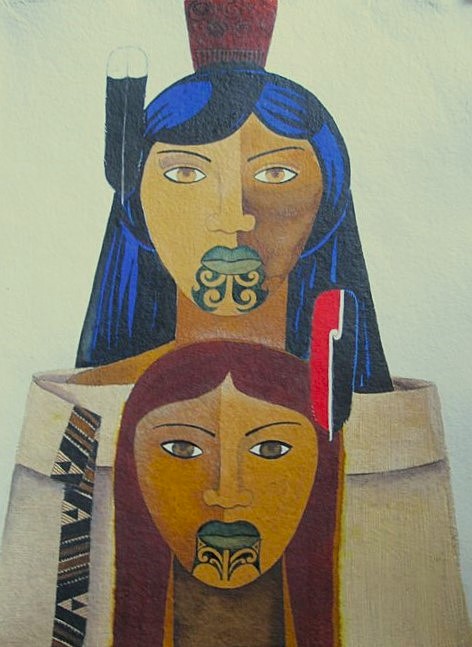
We have worked hard at Te Whāriki Manawāhine o Hauraki over the last four years to build our ‘Hauraki Whānau Voices’ research programme. We have undertaken four key foundational research projects exploring the experiences of whānau Māori in our communities: He Whare, He Taonga (housing poverty and family violence), Gang Whānau Healing from Intergenerational Trauma (systemic discrimination), Voices of Takatāpui Rainbow and MVPFAFF Survivors (intersectional challenges), and Hauraki Māori Weathering Cyclone Gabrielle (crisis response gaps).
A consistent finding across all our research has been that wāhine Māori disproportionately bear the burden of violence, both in their homes and through their interactions with community agencies and services. This burden becomes even heavier for wāhine with intersecting identities. Those who are Māori, women, and also from gang whānau or takatāpui experience what our participants describe as a “multiple whammy effect,” where each additional identity marker increases their vulnerability to violence while simultaneously decreasing their access to effective support.
It was this recognition of the layered, intersectional discrimination faced by wāhine from gang whānau that led me to focus one of our research projects specifically on their experiences. Our mahi highlights how these wāhine are healing from intergenerational trauma and reclaiming their narratives.
“Ki ō matou ake kupu…”
Gangs in Aotearoa have evolved over four to five generations into distinct gang whānau, with mokopuna and mokopuna tuarua born into them. These whānau are among the most marginalised and discriminated-against communities in Aotearoa.
There is no good reason for any of us to be applauding the way gang whānau are treated, especially in light of the Abuse in Care Royal Commission of Inquiry findings, which showed that 80 to 90% of Māori gang members experienced abuse in state care. The sixteen volumes of survivor pūrākau, completed in 2024 after seven years of inquiry, clearly lay out what needs to change and reinforce what has long been known: state interventions designed to force tangata whenua into becoming model white-is-right citizens do not work.
Yet despite the Commission’s powerful testimonies and recommendations, the current government is ignoring them while actively dismantling protections for whānau Māori, attempting to erase whānau identity, and profiteering from the misery this creates for whānau caught in that system.
Negligent legislation such as the repeal of Section 7AA of the Oranga Tamariki Act removes state obligations to uphold tikanga and support whānau-led solutions, making it easier for tamariki to be removed from their whānau and placed in institutional care. These policies do not exist in isolation. Across the world, Indigenous communities face similar state interventions designed to break whānau connections and erase Indigenous ways of knowing, and the forced removal of Indigenous children in Australia, Canada, and the United States echoes the ongoing dislocation of tamariki Māori today.
The current government’s “get tough on brown crime” policies target gang whānau through increased surveillance, restrictions, and fashion policing, rather than addressing the systemic inequities and racist attitudes that sustain colonial oppression. When the state fails as a parent and then conceals its own incompetence, there is little accountability and few consequences, while the same cycles continue for the next generation of whānau.
Over the last two years, however, leadership from one gang whānau have been working with Te Whāriki Manawāhine O Hauraki to break that cycle of intergenerational trauma, with the goal of ensuring it is no longer passed on to their mokopuna. This collaboration is grounded in Te Ara PouTama and PouHine, a Hauraki-based traditional model of healing mahi tūkino that has been operating for over 20 years.
In 2024, I was a recipient of the Rangahau Hauora Māori Researcher First Grant from the Health Research Council to undertake a research project through which wāhine from gang whānau could voice their lived experiences in their own words. Using Mana Wāhine methodology and pūrākau kōrero, our project captures the healing journeys of these women. They are mothers, grandmothers, great-grandmothers, sisters, partners, and leaders who live, laugh, love, and breathe the same air as everyone else in Aotearoa. They work, pay taxes, raise tamariki, plan for the future, and dream of a world where their mokopuna can thrive in violence-free communities.
These wāhine are showing us a different path. “We define who we are,” says their leadership, words that carry particular weight from women who have had enough of others telling, claiming, or profiting from their stories, as TVNZ1 did recently to four of their leaders. For years, wāhine from gang whānau have watched as media, academics, and wider society have painted pictures of their lives that bear little resemblance to their lived reality.
“We are not your data,” one wahine told me during our conversations. “We are not your research subjects or your social problems to solve.” This assertion challenges generations of research that has too often treated whānau Māori as subjects to be studied rather than as experts in their own lives. “We are accountable to ourselves,” they emphasise, and this principle shapes not only their healing journey but our entire research process. It recognises that genuine knowledge comes from within communities, emerging from both lived experience and ancestral knowing. Guided by the work of Matua Moana Jackson, Mātikite Mai reminds us that this knowing is carried in both lived experience and the ancestral wisdom that resides in our DNA.
The impact of intergenerational trauma requires healing that grows from within communities, and these wāhine understand that their work in PouHine wānanga creates spaces where both personal and collective healing can emerge. This is not about outsiders coming in to fix their lives. It is about wāhine Māori supporting wāhine, sharing knowledge, building strength together, and reclaiming their herstory and whakapapa. One wahine describes what these wānanga have meant to her:
“The PouHine has saved my life…My tūpuna were always with me, calling me home to myself.”
Our research methodology mirrors this approach, creating space for wāhine to document their own journeys, share their insights in their own words, and build solutions that make sense for their daily realities. The project has one clear purpose: working with wāhine from gang whānau to co-create how their pūrākau are told. While acknowledging institutional requirements, our work prioritises wāhine-led approaches to gathering and sharing experiences, and by shifting who shapes knowledge and who tells the story, research itself becomes an act of decolonisation.
These women are reclaiming their narratives, restoring what was taken from them, and building futures for their mokopuna. They are telling their pūrākau on their own terms, grounded in their whakapapa, and mana motuhake.
Paora Moyle (Ngāti Porou) is the Kaihautū Rangahau at Te Whāriki Manawāhine O Hauraki, working with wāhine leadership from gang whānau to share and document their healing journeys, in their own words.
Image with consent from Robyn Kahukiwa (Artist extraordinaire)