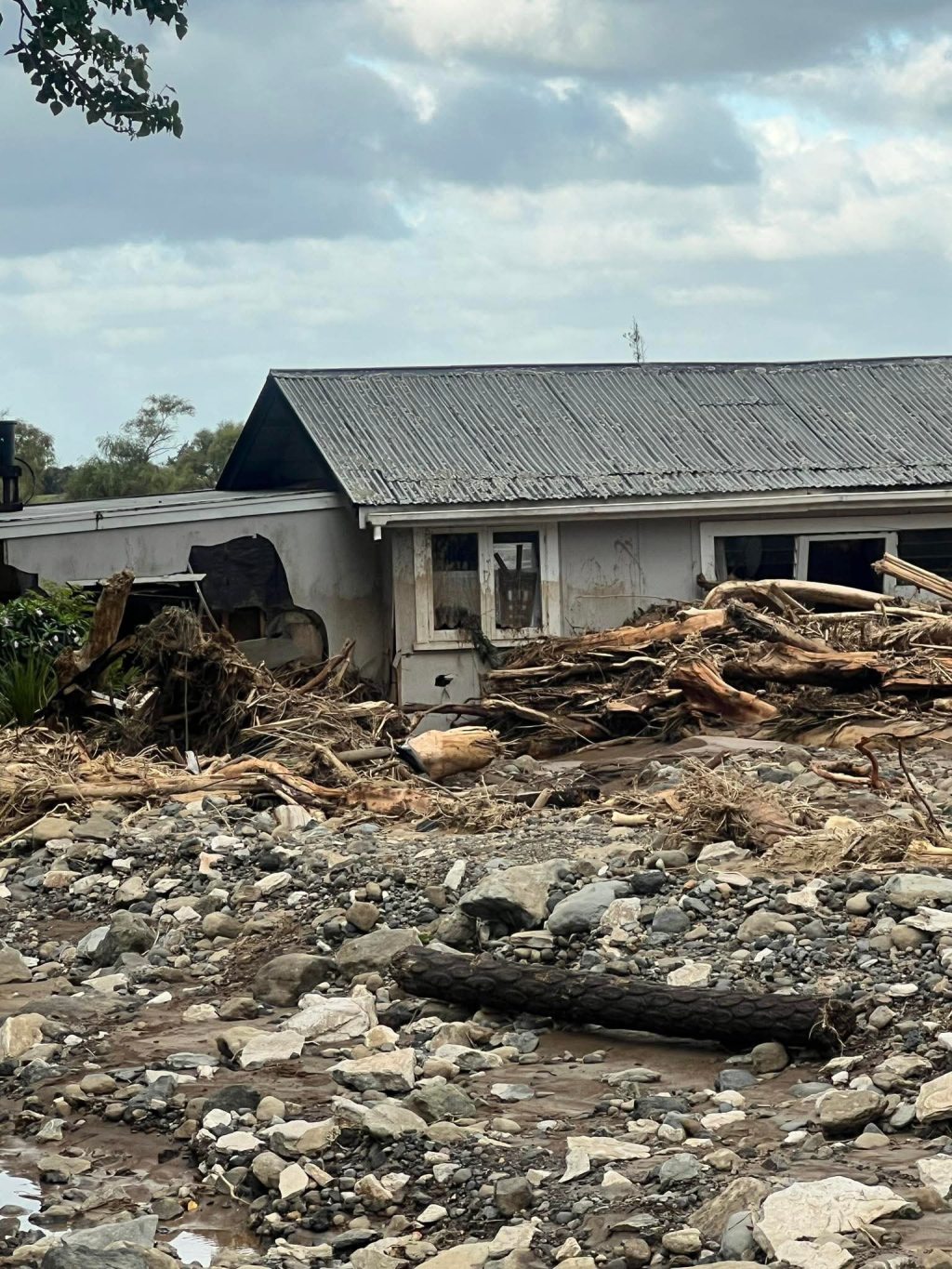
Last week, a tropical low hit the communities where I come from on the East Coast and where I live now in Thames-Coromandel.
Punaruku, our whānau whenua on the East Coast, was devastated and cut off. Big logs and brown water coming off the hills destroyed my nanny’s whare. Our urupa, where my mum lies, was significantly damaged. It’s been two years since mum passed, and that’s one of the reasons why I’m writing this. Many of our whānau lost their homes and livelihoods. But as they invariably do, these big, hearty Ngātis just get stuck in, clearing roads, helping whānau recover, and cleaning up everything.
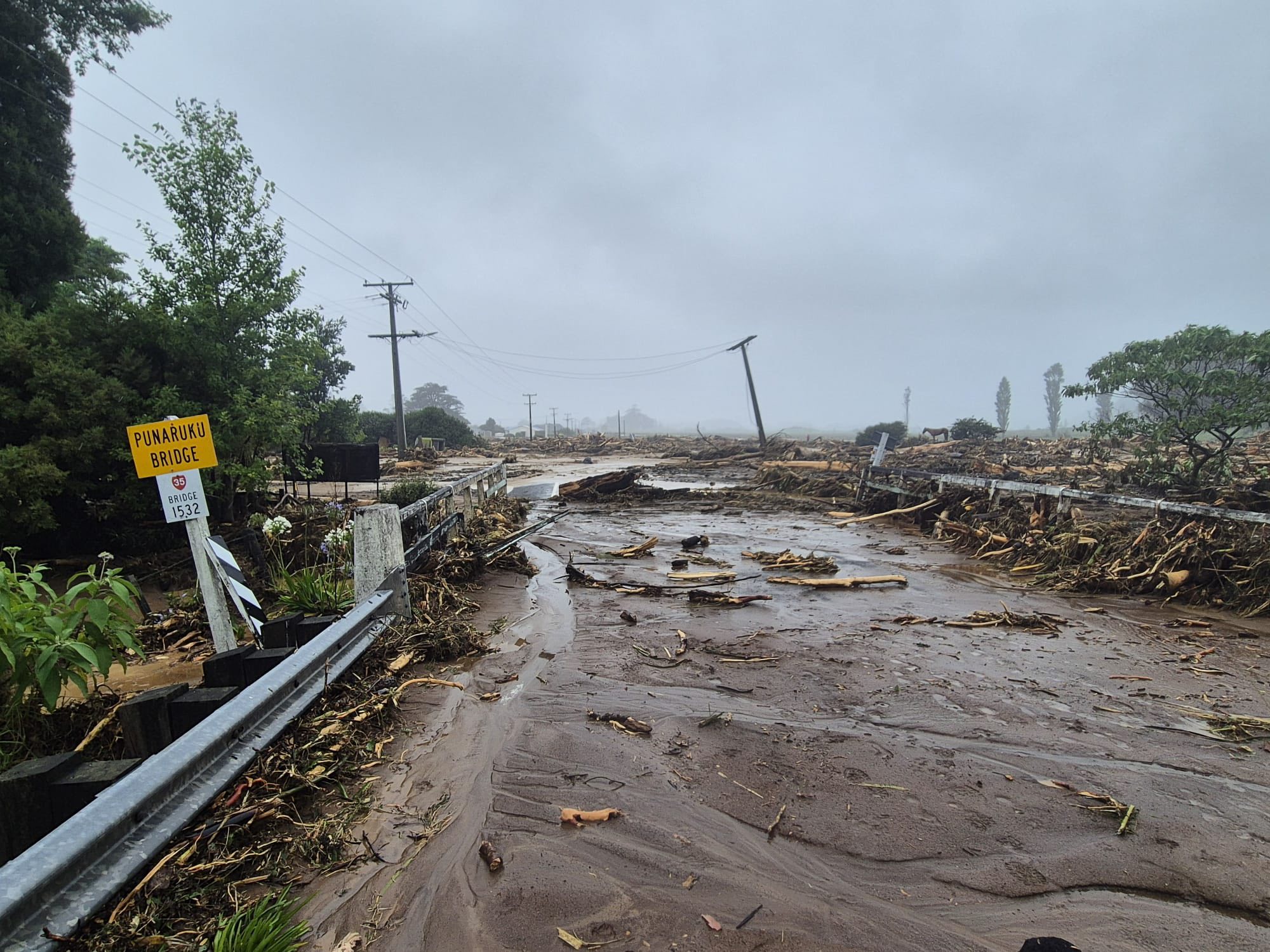
At home in Thames-Coromandel, a local firefighter said the damage here was “the worst he’d seen in 30 years, worse than Cyclone Gabrielle”. This is a story about councils failing to implement their own agreed Māori-led solutions. Again.
States of emergency were declared across five regions. On the East Coast, Te Araroa, Onepoto, and Wharekahika were among the worst affected. In Pāpāmoa, two people died after a slip damaged a house. At Mount Maunganui, a major landslide at a campground left six people unaccounted for, including two teenagers.
There is a pattern on repeat here. Tauranga City Council completed a 2025 hazard report for the exact location where the landslide occurred. The report stopped at the fence line, focusing on homes while ignoring the campsite across the road. Fire and Emergency called the council at 5.51am, reporting a slip near the holiday park. Hours later, the fatal landslide occurred. Mayor Mahé Drysdale now supports a“full, independent review” as if the council’s own hazard report doesn’t already tell the story.
On his way to Tauranga and the East Coast, Prime Minister Christopher Luxon made a flying visit to Thames for what appeared to be a token photoshoot. He didn’t get his red bands on or stop to talk to us who stood outside TCDC waiting to discuss the lack of climate response, or his government’s $6 billion resilience fund cut after Gabrielle.
The new TCDC mayor, Peter Revell, told one of our people on the quiet that someone else should be managing this crisis. (We understood that to mean he didn’t feel he was the person for the job). A while back, I personally handed him and his staff a copy of our research. Kaupapa Māori-led research of this kind has never been conducted in this rohe before. Our Hauraki Māori Weathering Cyclone Gabrielle study documents what happened for our whānau during the disaster and outlines what needs to change.
What We Documented During Gabrielle
When civil defence abandoned isolated Hauraki communities during Gabrielle in 2023, a marae desperately needed a generator for displaced whānau. Civil defence said none were available. The same day, a helicopter flew overhead carrying three generators to a wealthy, predominantly Pākehā community.
When civil defence finally showed up at the evacuation centre that Hauraki whānau had established and were running, they tried to commandeer the food and resources to redistribute to people they deemed more deserving. Our houseless community members were turned away from official centres. They were told they weren’t eligible because they were already sleeping rough. Because they were already homeless, they were considered less deserving during a humanitarian crisis in 2023.
As one participant put it: “It reeks of 21st century, well-tuned, well-willed institutional racism.”
Within 6 to 12 hours of being treated as the poor cousins, Hauraki Māori communities had activated their own emergency networks. They already knew who needed dialysis, who required medication, and who lived alone. They knew their whenua, their weather patterns, their people through environmental tohu and mātauranga.
Whānau took over a local school and transformed it into an emergency centre with beds, kai, separate areas for families, and even a room for pets. As one participant described it: “Supporting whānau, making them feel comfortable, make sure they were warm and had a beautiful place where they were and feeding them. It didn’t matter who walked in the door.”
One community leader was direct: “We’ve got eyes and ears on the ground. We’ve got gumboots and raincoats on the ground that can tell you what’s going on. The point is, if they had listened to the locals, they would have been able to do something about it prior to all of that happening.”
What the Research Provides
Our research used the Pū-Rā-Kā-Ū framework (Wirihana, 2012), adapted to intentionally put participant voices first. Homegrown solutions from the people who know. The research outlines a Matike Mai approach that recognises marae-based emergency management hubs as critical infrastructure. It calls for amendments to the Local Government Act 2002 and Civil Defence Emergency Management Act 2002 to embed Māori leadership, and for removing Building Act barriers that prevent whānau from using papakāinga housing models in post-disaster recovery.
Thames-Coromandel District Council staff participated in the research. They acknowledged historical trauma and mistrust affecting Māori engagement with Council. They admitted their approach was often process-driven and one-way instead of people-driven. They recognised that the relationships needed to weather emergencies have to happen well before the event happens.
Māori are present in these councils. They’re in the rooms, trying to convey exactly this. But presence is not power. The problem isn’t absence of Māori bodies. It’s lack of authority to shift decisions.
Mid-last year, Thames-Coromandel, with two other District Councils, met specifically to look at these recommendations. They said the research was brilliant. They listened to us. They agreed with us. They voted unanimously to implement the recommendations. Then they parked them.
The Problem We Can’t Name
Several months after that unanimous vote, the extreme weather hits again, worse for some than Gabrielle two years before. Marae led the response, providing shelter for stranded travellers and evacuated locals, kai and power for communities cut off from the outside world.
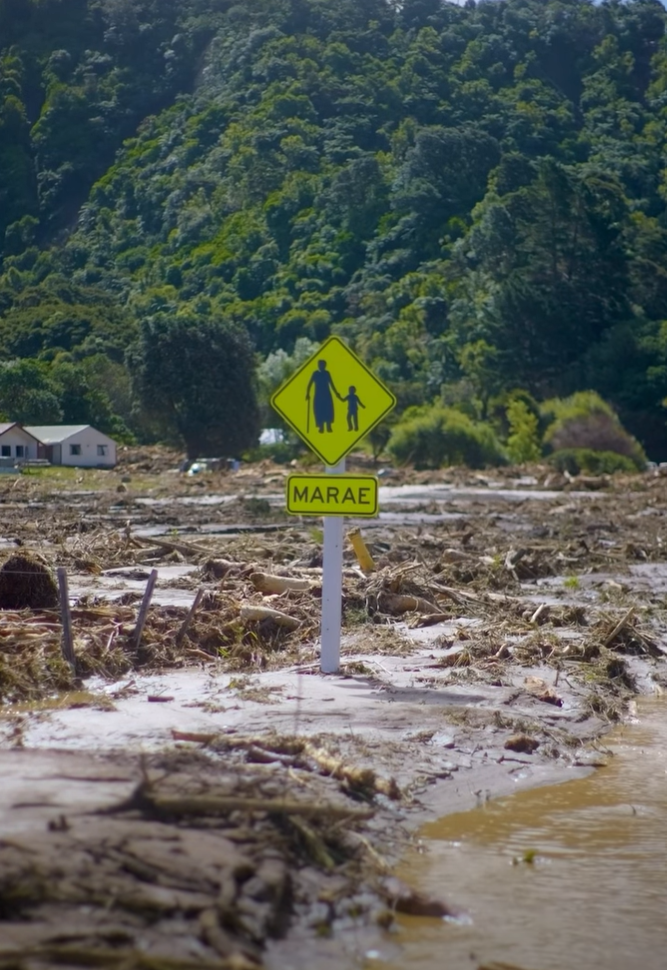
Mayor Revell quietly told one of our people that TCDC needs help with disaster recovery. But perhaps he can’t publicly acknowledge that the answers are right there in his hands, from us, from Māori who’ve been managing these crises all along.
That’s the problem. Sound research exists. Homegrown solutions from the people that use environmental tohu and mātauranga exist. A plan of action and the Matike Mai approach exists. Council unanimously agreed to implement it.
But they still can’t admit that white authority doesn’t have all the answers. That generators should have gone to the marae first. That houseless people deserved shelter during a humanitarian crisis. That the environmental knowledge our communities carry is more valuable than one-size-fits-all approaches from regional authorities who don’t even live here.
So instead, we get token flying visits where the Prime Minister won’t talk to climate-concerned citizens. Quiet admissions from mayors asking for help. Unanimous votes that lead nowhere while marae continue stepping up without proper resourcing or recognition.
And whānau keep losing their homes. The pattern repeats because the only thing missing is the courage to publicly acknowledge where the answers came from and actually implement them.
All of these places will flood again. The extreme weather events are increasing. When it happens, marae will step up because it’s what we do. Councils must act when they first know and must implement what they unanimously agreed to. Otherwise, somewhere in a council office will sit a report with solutions, but no one implemented, because implementing them means admitting we were right all along.
Paora Moyle KSO is Director of Research at Te Whāriki Manawāhine O Hauraki and led the Hauraki Māori Weathering Cyclone Gabrielle research.
 POUHINE
You must be logged in to post a comment.