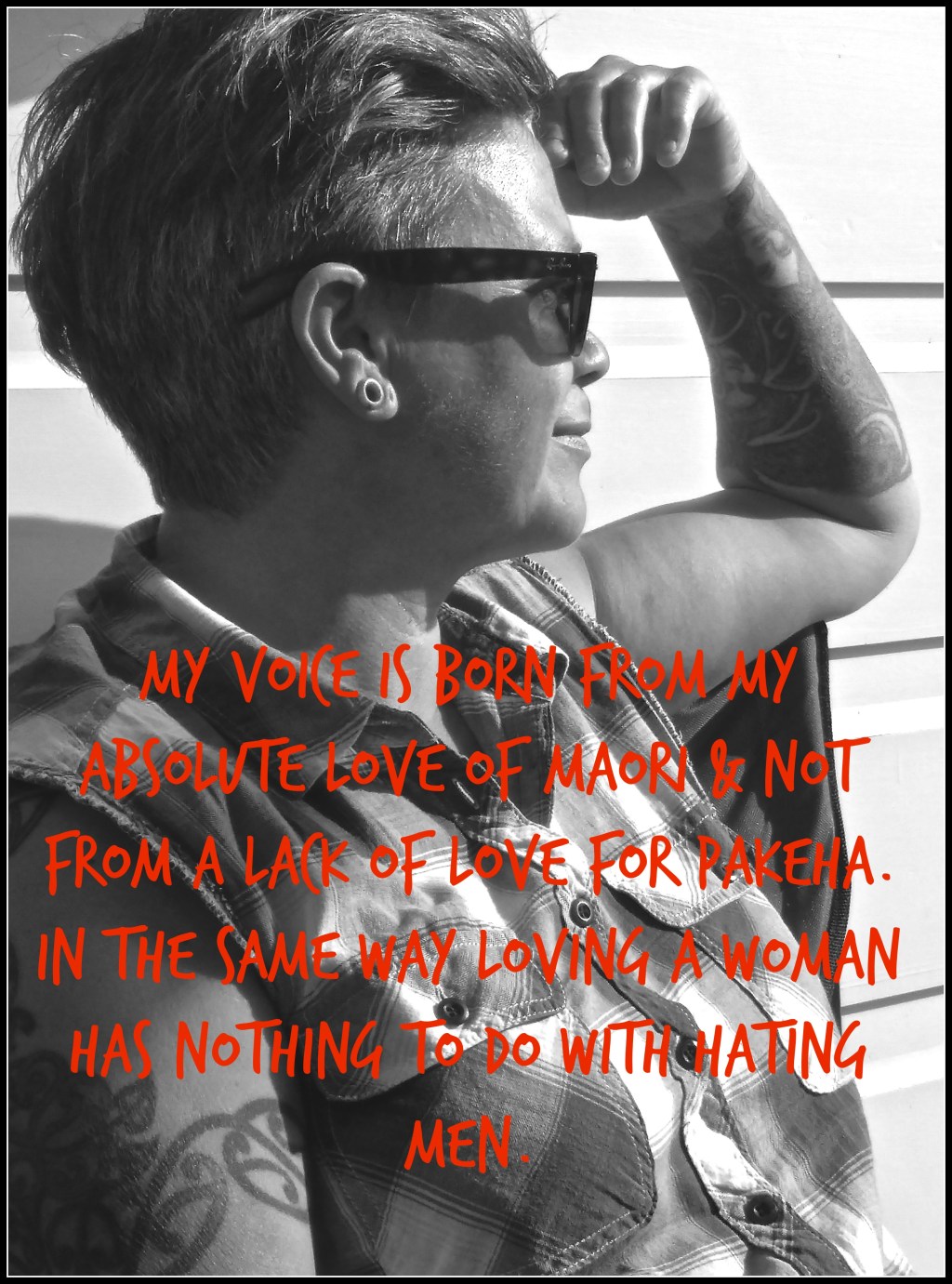
This blog is about institutional (structural) racism within New Zealand social work. If you are not asking yourself, your organisations and speaking platforms about how you contribute to the power structures that marginalise Māori, then I will. To spotlight this, I talk about my experience as the newest Board member of Aotearoa New Zealand Association of Social Workers (ANZASW). I would like to make it clear that this blog is not “a one-person campaign” to bring down social work, nor is it written to bring any single person or indeed, ANZASW into disrepute. I write it because from my indigenous perspective there is a TRUTH to be told that the whole of social work in New Zealand is not owning enough. It is that institutional racism in Aotearoa is thriving and is a key instrument of colonial rule, oppression and genocide through the ever increasing removal of Māori children into the care of the state.
Racism[1] is not always about the obvious (overt) kinds like apartheid, slavery, and assimilation. It is also the more subtle (covert) kind, as in a Pākehā unaware of their own racism behaves in racist ways and blames it on the Māori. Or negatively judges a Māori who does not behave like a Pākehā. Racism is also the subtle indicators that show a lack of respect for you as part of a roopu, such as dismissing a point of view, eye rolling, mocking voice tones, not being given all the information, ignored or Pākehā feeling they have a right to finger wave at you when you question their power. Who attack you, your professionalism and your korero because you are deemed a threat to them. It is also when others in the group sit back in silence and allow this behaviour to happen.
In order to get to the heart of this blog, I want to share some of my background to give you (the reader) to get a sense of why I put racism on the table. It may well come across as personalised and it is because that is the unique ‘insider’ lens that I bring to the table. I have been a social work practitioner for 25 years. I also had 14 years of experience as a child in the care of the state. I grew up in a very Pākehā and abusive system where it was rare to come across a child who had not been harmed, in some way, by adults charged with their care. I never stopped trying to whistle blow about the constant sexual and physical violence on kids from these so-called caregivers. That all too familiar feeling of cold creeping fingers that slide across your mouth and lock onto a small jaw, stifling the cry, the voice, the breath and efforts to protect the little ones. The finger waving and stabbing at the air in front of you, and the words uttered through gritted teeth “you’re a little shit stirrer, a liar, a naughty girl who just wants to hurt good people” or when trying to be heard,“it might help if you say it nicely.” I remember thinking about how these adults had no consciousness of their bullying, like it was normal. It did not make any difference if I was “nice” because it was not about correcting the child, but silencing her.
I still experience this today when I speak up about racism. A familiar story particularly for Māori women who frequently start out being polite, only to be shut down until we demand to be heard. Often, if you are both Maori and a woman your marginalisation is layered like stacks on the mill. We often hear that Pākehā would listen to our message if we’d just change the words and the tone we use to talk about racism. Called tone policing[2], this is when marginalised people (Māori/women) speak up about our struggles and people from more dominant groups (Pākehā) focus not on what we said, but how we said it. As if the way a person talks about the racism they experience is much more important than the actual racism (or sexism) they experience. In the case of many Pākehā, it makes them uncomfortable and they want to deflect the attention away from their racist actions and refocus on the Maori and how they are wrong for pointing out racism. It feels like victim blaming, much the same as when a rape victim is blamed for drinking too much or dressing provocatively. Indeed many Pākehā are uncomfortable with the word ‘Pākehā’ because they incorrectly think it is a derogatory term. If this is the case for you and you are working with our people, then be seriously concerned about your competence to do so. But I will talk a bit more about tone policing later. First, I will tell you a bit more about me as a lead up to central point of this blog.
I realised about six years ago that all the social work I did barely made any impression in the lives of whānau I worked alongside. I saw all the ways that our voices are silenced through Pākehā speaking on our behalf, defining who we are as a people, being problemised and pathologised until the cows come home! Consistently measuring us and all other ethnicities against Pākehā as the norm. I also saw how much power academics had in terms of the negative impact their research had on our people. So I thought I would try to bring some counter-balance by joining academia. I applied to study at Massey University and my focus was on child protection and critiquing how Pākehā policies, practice and procedures, perpetuated the marginalisation of our people. I earned a Master of Social Work with first class honours and I am now doing a PHD in Social Work.
My work in research highlighted in neon light how whānau experiences of child protection in Aotearoa were being overlooked through generalising Māori into the mainstream mix of academic research and ministerial reports. Heaps of academic research being carried out that include negative stats on our people but hardly any of it actually asking whānau what their lived-experience is. Māori are 15% of the population, half of the total families who are transacted through child protection processes and two thirds of children in state care. Only the individual factors of social need are being focused on for Māori because they are measurable, whilst the drivers such as colonisation, structural discrimination and cultural genocide of our people are ignored (Moyle, 2013)[3].
Pākehā paralysis has a lot to do with marginalising the Indigenous voice. This is where Māori are deliberately excluded from Pakeha researchers general population research samples on the basis of not having the cultural competence to research Māori. Tiloch (2002) [4] talked about this and how tertiary ethics guidelines and universities are now teaching exclusion of Māori and thus failing to fulfill te Tiriti o Waitangi responsibilities. And may I remind people (Social Work 101) that there were two parties to te Tiriti, Tauiwi (all other iwi) and Tangata Whenua. Māori are not another ethnic group. From my perspective Pākehā paralysis is a case of, “I can’t fulfill the ethical considerations of consultation and tikanga so I’ll get around it by ignoring Māori altogether.” At the very least, I think research that impacts Māori in any way shape or form has to have Māori researchers at the table, from inception to completion. Excluding Māori and ignoring te Tiriti is racism in action and pleading unconscious bias is a cop-out!
My intention was to share what I was learning about how institutional racism was largely ignored in New Zealand social work. At the same time I was also being subjected to a couple of academics putting my work down. The kind who rubbish kaupapa Māori findings because it threatens their own work. For example, “Paora Moyle is inacapable for being objective in her work (providing a balanced acount of two opposing world views) because she is too stuck in her state care background.” So, I started a Facebook page about my research and produced a series of short video-blogs (easier for whānau involved in the research to get the main points rather than read screeds of academic speak). The videos became very popular with whānau, social work students and frontline practitioners.
A most popular vid-blog was my korero around Puao-te-ata-tu (daybreak) and why this ‘blueprint for social welfare’ never got to see the light of day. The document Puao-te-ata-tu[5] is important becuause it clearly stated that unless you address institutional racism and deprivation in the first instance, then everything you do there after will be ineffectual. Are we just creating jobs for ourselves, feeding the brown care to prison pipeline, shifting deck chairs and drinking at the trough? Why can’t Pākehā research issues related to their racism in it various guises? “It is a critical part of social work – we do it to other families every day, but when Pākehā do it to their own the barriers are so big they cannot even hear each other for the distress and trauma that it causes. Why? Pākehā need to grow through active discussion and respectful listening with Māori. If they cannot do it for each other, then how can they act responsibly in the community? Why not RISE to this challenge instead of denial, blame and justifying one’s actions” (WMR).
I also started to ask what are the Tangata Whenua Social Workers Association (TWSWA) and the Tangata Whenua Voices in Social Work (TWVSW), and the Aotearoa New Zealand Association of Social Workers (ANZASW) doing to challenge the systems of power that create the marginalisation of Māori? Are they encouraging Pākehā to ask uncomfortable questions about their own role in supporting these systems of power? What are they doing to challenge the need for research in this country to be de-colonised? Or for social workers to no longer be approved as culturally competent or the new term, culturally fluent? We could refer to all of this as white supremacy in the same way sexism is about male supremacy. Not least, are we checking our Ivory Towers where governance is influenced by white middle class academic/life members and also comfortable Māori who uphold the status of Pākehā; the ones who work in the Master’s house whilst their kin work in the field? Too strong? Well sometimes naming it for what it is makes people pay heed.
The vid-blogs I did for whānau and students proved popular and led to being featured on the Re-Imagining Social Work in Aotearoa[7] (R-SW) forum. I was particularly intrigued with R-SW’s personal statement, “We propose to resist the silencing of our voice by creating a space to discuss, debate and deliberate on the future of modern and progressive social work services in Aotearoa New Zealand.” This being their response to the ‘CYF Review Panel of Experts’ who had no social workers at the table, yet the R-SW team have NO Māori at the table. (I also heard one of them state at a conference that “it is unlikely that they would ever have Māori on their collective”). This is the epitome of hypocrisy because almost every article featured on the R-SW platform excludes any analysis of the over-representation of Māori in social systems and indeed how continued colonisation, structural racism and historical trauma contributes to this. This R-SW forum (in my opinion) is a prime example of Pākehā speaking on behalf of Māori through absorbing them into the mainstream mix. (And despite their statement above I experienced their moderator denying my comments to the site). However, R-SW were largely responsible for spreading the popularity of my vid-blogs and my albeit modest international following. I was cool when I was R-SW’s token Māori activist but as soon as I turned the light on them, they shunned me.
Around this time (when I was cool), a couple of the R-SW collective and members from TWSWA and TWVSW had suggested I put my name forward for the ANZASW’s Board. I did so and I was voted onto the Board by a significant margin [8] which to me, pointed to the wider membership wanting to hear what I had to say. It also confirmed for me that my vid-blogs, presenting to groups and social media presence made a difference for our TW members. My initial impression of ANZASW was that biculturalism was a tino-rangatiratanga sticker in the front window or a hand-flag waved when required. I saw that there was work to do to bring tangata whenua into alignment with ANZASW’s espoused commitment to te Tiriti.
Being new to a group is a privileged position and one that affords a fresh set of eyes. Almost immediately I experienced a clip from a Pākehā member to mold me into place. For example, I was talking about the importance of ANZASW being seen (by the wider membership and the public) to be in touch with the current critical issues impacting Māori, especially our mokopuna being uplifted by the state. I was told by a Pākehā male Board member that ANZASW, “is not a vehicle for all or our political aspiration and concerns.” This clip inspired my next blog[9] in a bid to help the Board hear what I was trying to say and to draw attention to the subtle ways I felt my expression was being curbed in this space. My focus at this point was lobbying for equal TW representation at the table because for me this is where everything started. Māori must be at the table and we must be tika, pono with aroha in our bicultural leadership.
Now comes the twister in this account. I wrote another blog[10] in response to a research project titled EnhanceR2P.[11] The blog called into question the right of the four Pākehā researchers to do research that impacted Māori without Māori being at the table from inception to conclusion. It was NOT an ANZASW initiative, however the four researchers also happened to be ANZASW members; two of which were on the Board. I first learned of the EnhanceR2P project when it was announced via Facebook. This research had potential to change how and what we teach social workers in Aotearoa. It could also speak to how culturally ill-qualified many social workers are to work with whānau. Naturally, I wanted to find out more so I asked a series of questions via the Facebook page but the team ignored the questions. Other Māori asked questions and they too were ignored. I was told later by one of the researchers that “the project was not up for discussion yet.” And I wondered why the big announcement on Facebook and why not say ‘why’ it is not up for discussion. So I wrote the blog to ask questions and raise my concerns about Māori not being at the project’s table and I submitted it to the ANZASW’s newsletter which went out to all members. The challenge to the EnhanceR2P in the newsletter was enjoyed by many members but not those who supported the research, as I was about to find out starkly.
At my second ever ANZASW Board meeting I was treated with contempt by the two Board members who were also researchers of the EnhanceR2P project. During the confidential (non-recorded) part of the hui I was ‘taken to task’ by these two and it was very clear from their level of emotion thry displayed that they were angry with me (I’d had no warning of this). They told me that “I had caused irreversible damage to ANZASWs reputation which included their relationship with the International Federation of Social Workers (IFSW),” that “I had rubbished their project work, turned on my colleagues and did so with fury.” Also,“you’re right Paora, just because some Māori agree to something, does not mean that all do…but then you don’t speak on behalf of all Māori.” These two people had a grievance with me but this hui was NOT a grievance procedure. Nothing should ever be on a Board’s agenda that comes as a surprise to one of its members and is a non-Board issue. From my perspective these two took advantage of their privileged positioning (on both the Board and the research team) and used Board protocol to ‘take me to task’ inside confidential time so that their behaviour was protected. To them this was “ethical.”
Why am I explaining this experience in detail? “Because we all have to be subject to accountability for our actions. If you hold a governance position you better be ready to check your own practice and put it up for scrutiny. One can not be sitting there not declaring your ecology of thinking and what has shaped and formed it” (RTBR). And this also, “No Māori should be subjected to Pākehā justification for Pākehā doing research on Māori. This is Social Work 101. It is NOT ok that colonisation plays out in this way in this day and age and in our profession” (Anne-Marie Stapp). When the conversation becomes about Pākehā hurt feelings and not the racism that Māori are ‘calling out’ you are derailing our voices and our emancipation. It becomes a manipulative bargaining tool when Māori have to offer sweetness in order for Pākehā to care about our daily struggles. All of this is neoliberalism and racism; under which is fascism and individualism verses collectivism.
It is time to call on the ANZASW tangata whenua membership nation wide and ask them to caucus about what the membership issues are for them so that their perspectives can be conveyed. I asked for this multiple times through the ANZASW National Office and was ignored.
Creating space/platforms for Māori to speak from instead of shutting us down, with an explanation that you’ve got our backs would be a great way to show us that you’ve actually got our backs! To build platforms upon which we can stand and speak up about our lived-experiences of oppression and in the case of tangata whenua, colonisation and genocide. To resist the relentless attacks upon our collective Indigenous soul. What I am not happy with are those who appear to be creating these platforms for the advancement of ‘privileged Pakeha’ agendas whilst simultaneously silencing the voices of tangata whenua. Take for example the repetative member make-up of the following platforms in social work, ANZASW Board members,[15] the ANZASW editorial committee,[16] the Re-imagining Social Work collective,[17] and the EnhanceR2P research team.[18]
I spoke to my whānau on my personal FB page about my experience of being ‘taken to task’. Unfortunately, one of the two Board members took screenshots of this a conversation and shared it with the rest of the Board. They also posted the shots of my conversation on a social work page where I was not a member and so I could not post my side of the story up. Hype and backlash followed about how my blogs incited inaccuracies about the EnhanceR2P project. I also got emails and comments telling me off about breaching Board confidentiality; about being unethical, dangerous, about defamation and expulsion from social work, te me te mea. Even people (Māori and Pākehā) who follow my work defending me were taken to task on social media pages, called “mischief and stirrers.”
For months now I’ve been taking hits from well positioned and respected people in social work via emails and commentary on social media that I am disrespecting my colleagues and defaming them. I’ve been labeled unethical, divisive and seen as a threat. Well my silence does not belong to you. It cannot be bought and sold with anger, threats and shaking your finger at me. I will not be silent so that you can be comfortable. I will not participate in your silencing of our voices. I’ve been ‘hit’ many times both as a child and as an adult. There is nothing more you can do to me that I have not already experienced. You have no right to keep me from protecting myself, my whānau and future generations of our people.
Contact Paora at: pmoyle2@yahoo.co.nz
P.S. For an update on ‘calling out of racism in social work see a further blog at: https://pmoyle.wordpress.com/2016/04/15/duplicitous-or-ethical-social-work/
[1]“Institutional racism is the manifestation of racism within all social systems and institutions and the social economic, educational and political forces or policies that operate to foster discriminatory outcomes. It is a combination of policies, practices or procedures imbedded in bureaucratic structures that systematically leads to unequal outcomes for groups of people.” See, Institutional racism and the social work profession: A call to action (2007). https://www.socialworkers.org/diversity/institutionalracism.pdf
[2] See at https://medium.com/@chanda/what-s-the-harm-in-tone-policing-e933d90af247#.tj91i8uub
[3] See at http://mro.massey.ac.nz/handle/10179/4731
[4] See at https://www.msd.govt.nz/about-msd-and-our-work/publications-resources/journals-and-magazines/social-policy-journal/spj19/pakeha-paralysis19-pages164-178.html
[5] See Puao-te-ata-tu at https://www.msd.govt.nz/documents/about-msd-and-our-work/publications-resources/archive/1988-puaoteatatu.pdf
[6] See at http://e-tangata.co.nz/news/white-ribbon-too-white-and-too-polite
[7] An all Pākehā collective that was, “formed in response to the New Zealand Government’s announcement, in April 2015, of plans to review and ‘modernise’ Child, Youth and Family…The review is to be led by an ‘independent’ panel of ‘experts’…who do not include a single child protection practitioner, manager, academic or researcher…”
[8] Email from ANZASW National Office.
[9] See at http://anzasw.nz/the-healing-our-spirits-worldwide-conference-institutional-racism/
[10] See at https://pmoyle.wordpress.com/2015/12/10/pakeha-doing-research-on-maori-the-enhancer2p-project/
[11] See at http://www.enhancer2p.ac.nz/2015/12/the-genesis-of-enhancer2p/
[15] See at http://anzasw.nz/governance-2015-2016/#1449884633246-9381d1ff-1e26
[16] See at http://anzasw.nz/the-journal/
 POUHINE