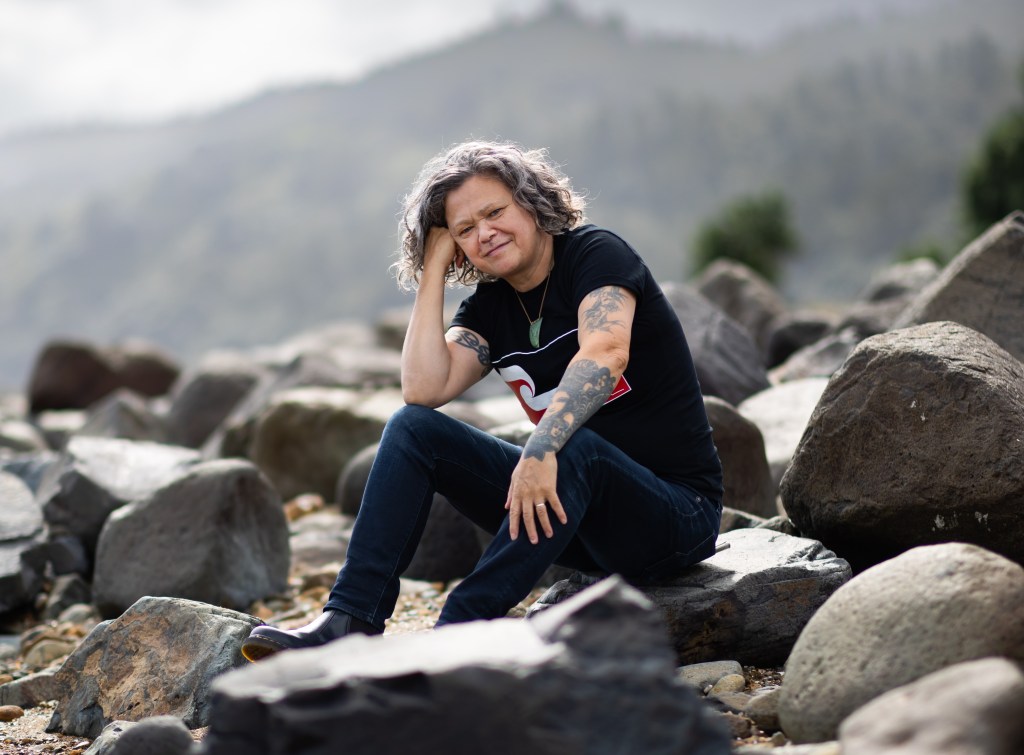
This article calls for better balance in how state care survival stories are told, arguing that wāhine survivors’ voices need equal platform time alongside the narratives currently dominating media and public programmes.
I’m watching a programme about state care and incarceration. The discussion is detailed and thoughtful. Academics, community leaders, and a well-known male survivor all talk about what happens to tamariki who end up in the care system. They mention boot camps, boys’ residences, gangs, and the pipeline from state care to prison. But once again, the voices of wāhine survivors are missing. These are the girls and women who have lived this reality.
This is a familiar pattern. I’ve seen this conversation happen on different programmes, panels, and conferences. Each time, half the story is missing.
A Pattern Worth Noticing
Women were placed in state care just as often as men. We experienced violence, abuse, and systemic failure. Many of us went on to become community leaders, academics, or advocates. Some used what they went through to build movements. We are not just the stories of what happened to us. We showed up to every hui, every remembrance, and every call for justice. At our Remembrance Day in Hauraki, 80 percent of those who prepared the whole day and content were wāhine.
But when the media covers state care, when programmes are made, and when panels are organised, the same voices are always at the centre. We hear stories about boot camps, boys’ residences, and gangs. These stories matter, but they have become the default narrative. They shape what people think state care survival looks like.
Eight years ago today, I wrote in The Spinoff about why wāhine survivors need to be included in the inquiry conversation. That was November 26, 2017. It was based on the Hui’s powerful piece on Ngā Mōrehu Wāhine, showing what accurate visibility can look like. But these examples are still rare. Most of the time, our specific stories are left out.
Violence Was Gendered
Violence in state care was gendered. The assumptions about girls and women in care were different. The ways we were controlled were different. The violence done to our bodies was an attack on our whare tangata, our ability to carry life. This needs to be named for what it was. It was an intentional assault on us and our place in the world.
When I worked on Whanaketia, the final abuse-in-care report, I pushed hard for a gendered analysis and an intersectional understanding. Early on, that analysis was almost invisible. It improved in the final version. Still, I faced familiar pushback. Some asked, “Why make it gendered? We were all abused.”
That response shuts down something important. When we merge all experiences into one story, we erase the specific realities of what wāhine endured. Still endure!
The violence was systematic and targeted. There were forced internal examinations and forced contraception. These practices were based on the belief that young Māori women were hypersexual, dangerous, or morally corrupt. Christianity also played a role, framing wāhine as people who needed control and correction. Some women had their reproductive organs removed without their knowledge or consent. Some were subjects of surgical experimentation. Sterilisations happened because of beliefs about race, menstruation, sexuality, and who deserved to become a mother. I spoke with a wāhine in our research this year who said, “I always thought it was my fault, just because I was born a wāhine. I thought that this was my lot, but it was policy.”
Stories about boot camps and gangs fit what mainstream media sees as newsworthy. The violence done to women’s bodies has become so normal that it barely gets noticed. When something isn’t named or centred, it stays invisible, even when it is documented and known.
The Cost of Incomplete Stories
This matters beyond just the historical record. In the programme I watched, the only mention of Māori women came from a Māori male academic. He said we are the fastest-growing group being incarcerated in Aotearoa. That was it. There was no analysis of why this is happening, no exploration of how gendered violence in state care connects to incarceration rates now. No wāhine spoke about what this means for our communities.
Why aren’t wāhine being asked to speak about this more often? Why isn’t there ongoing analysis? Where is the intersectional understanding that all of Aotearoa New Zealand needs?
The stakes are real and immediate. Survivor stories and truth-telling matter because most of us are not defined by our trauma. We are not just what happened to us. We are what we do with our experiences.
When the Social Investment Agency promotes their funding targets as “children of state care survivors” and “children of prison parents,” they are targeting mothers and grandmothers. These are the same wāhine who carry the burden of violence and hold our communities together when the state does not. This leads to more surveillance and targeting of whānau through predictive risk models that harm them. It also keeps alive the myth that we are bad parents.
Most of us who were in state care or prison went on to raise our families just fine. Only a small percentage of us fit that so-called cohort. “We are not your data. We are not your cohort. We are survivors of a colonial project, and we are still here.”
When our voices are left out of the mainstream narrative, this targeting goes unexamined. Without a gendered analysis, we miss how policy affects wāhine and our whānau more than others. This invisibility just grows.
Where are the wāhine who became doctors, community builders, and movement leaders? Where are takatāpui and rainbow whānau who were put into institutions just for being themselves? Where are the disabled and neurodiverse survivors whose experiences are rarely included in conversations about state care and justice?
What Needs to Happen
When programmes are planned, articles written, or conferences organised, someone should ask: Who is in the room? Whose experiences are being centred? Is the representation intentional or just by chance?
Balance means including a wider range of voices. Survivor voices are diverse, shaped by gender and many identities. This is what accuracy looks like.
Balance is possible. It means noticing patterns and making conscious choices about who gets to speak. Including wāhine voices should not be remarkable, as in The Hui’s Ngā Mōrehu Wāhine piece. It should be the norm.
Holding Space for All of Us
Wāhine mōrehu have always been here, building movements and showing up. Our visibility should match our presence.
The conversation about surviving state care needs to tell the whole truth about who survived and how our experiences were different. When we talk about “our stories,” it should mean everyone.
We honour all our stories by making sure every story gets told. We do this by creating space, sharing the microphone, and including everyone.
The work continues. The real question is whether we will do it with all voices present or keep repeating the same patterns we claim to fight against.
For my good mate Pearl and other survivors who are no longer with us this side
 POUHINE